
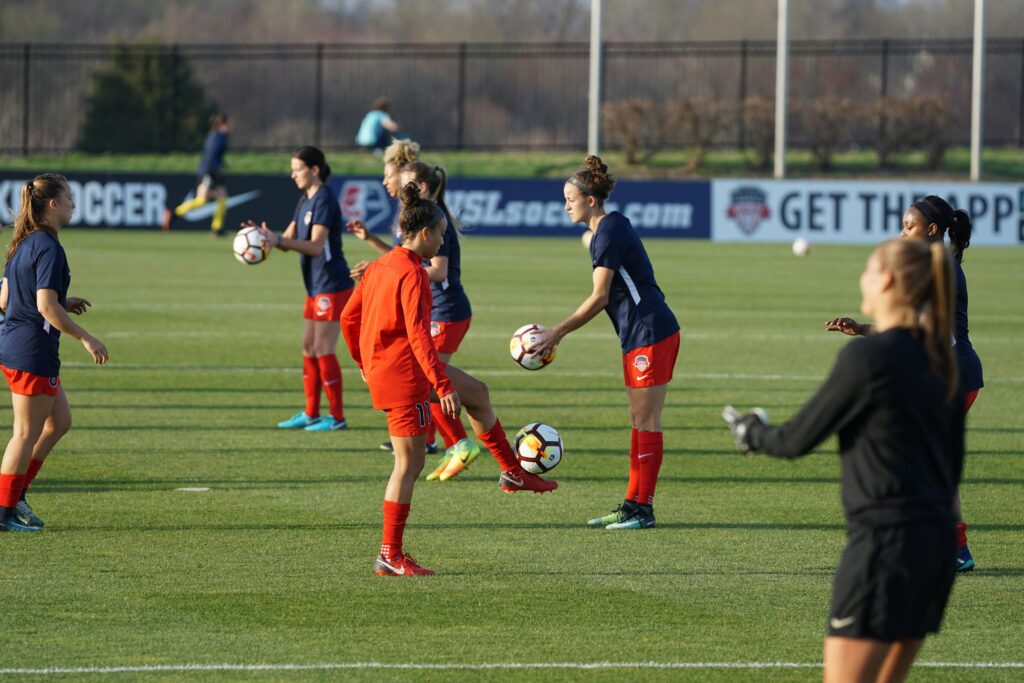
How to Run a High-Intensity Warm-Up for Youth Soccer Players
A proper warm-up sets the tone for the entire training session. For youth players, it improves focus, increases heart rate, activates key muscle groups, and reduces the risk of injury. A high-intensity warm-up doesn’t mean exhausting players before practice—it means preparing their bodies and minds to perform at their best.
Why Warm-Ups Matter
Youth players often arrive at practice distracted, stiff, or low-energy. A structured warm-up helps them transition into “training mode” by:
- Increasing blood flow and mobility
- Activating core soccer muscles
- Sharpening reaction time and coordination
- Improving mental readiness and focus
Goals of a High-Intensity Warm-Up
A good warm-up should accomplish three things:
- Raise heart rate through dynamic movement
- Activate muscles used in soccer (hips, hamstrings, quads, core)
- Prime technical skills with ball touches
Dynamic Warm-Up Sequence (U8–U12)
For younger players, keep movements simple, fun, and fast-paced:
- Jogging → High knees → Butt kicks (20–30 seconds each)
- Side shuffles → Skips → Backpedal
- Arm circles → Hip rotations → Light jumps
- Short accelerations (10–15 yards)
This takes about 4–5 minutes and gets players physically ready without overwhelming them.
Warm-Up Progressions for Older or Competitive Players
As players mature, increase intensity and add ball work:
- Dynamic stretches with movement (lunges, open/close the gate)
- Quick footwork ladders or cone patterns
- Partner passing at increasing speed
- 1v1 reaction drills (coach calls “left/right/ball”)
- Short sprints with direction changes
The goal is to blend athletic movement with technical sharpness.
Small Ball-Based Warm-Up (All Ages)
After dynamic movement, transition into ball work:
- Toe taps → Foundations → Inside/outside touches
- Dribble at different speeds
- Dribble → turn → accelerate
- Passing in pairs (one-touch, two-touch)
This builds rhythm and prepares players for the technical portion of practice.
Common Warm-Up Mistakes Coaches Make
- Warm-ups that are too slow or too long
- Static stretching before players are warm
- Skipping ball touches entirely
- Letting players stand around between drills
- Not progressing intensity gradually
Sample 10–15 Minute Warm-Up Plan
Here’s a simple warm-up you can use at any practice:
Minutes 1–4: Dynamic Movement
- Jogging → High knees → Butt kicks
- Side shuffles → Skips → Backpedal
- Short accelerations
Minutes 5–8: Ball Activation
- Toe taps → Foundations
- Inside/outside touches
- Dribble → turn → accelerate
Minutes 9–12: Partner Work
- Passing at increasing speed
- One-touch and two-touch combinations
Minutes 13–15: High-Intensity Finisher
- 1v1 reaction drill
- Short sprint with direction change
This warm-up gets players physically ready, mentally engaged, and technically sharp—setting the stage for a productive training session.
Final Thoughts
A high-intensity warm-up doesn’t need fancy equipment or complicated drills. It simply needs structure, purpose, and energy. When done consistently, it improves performance, reduces injuries, and helps players start every session with confidence and focus.