
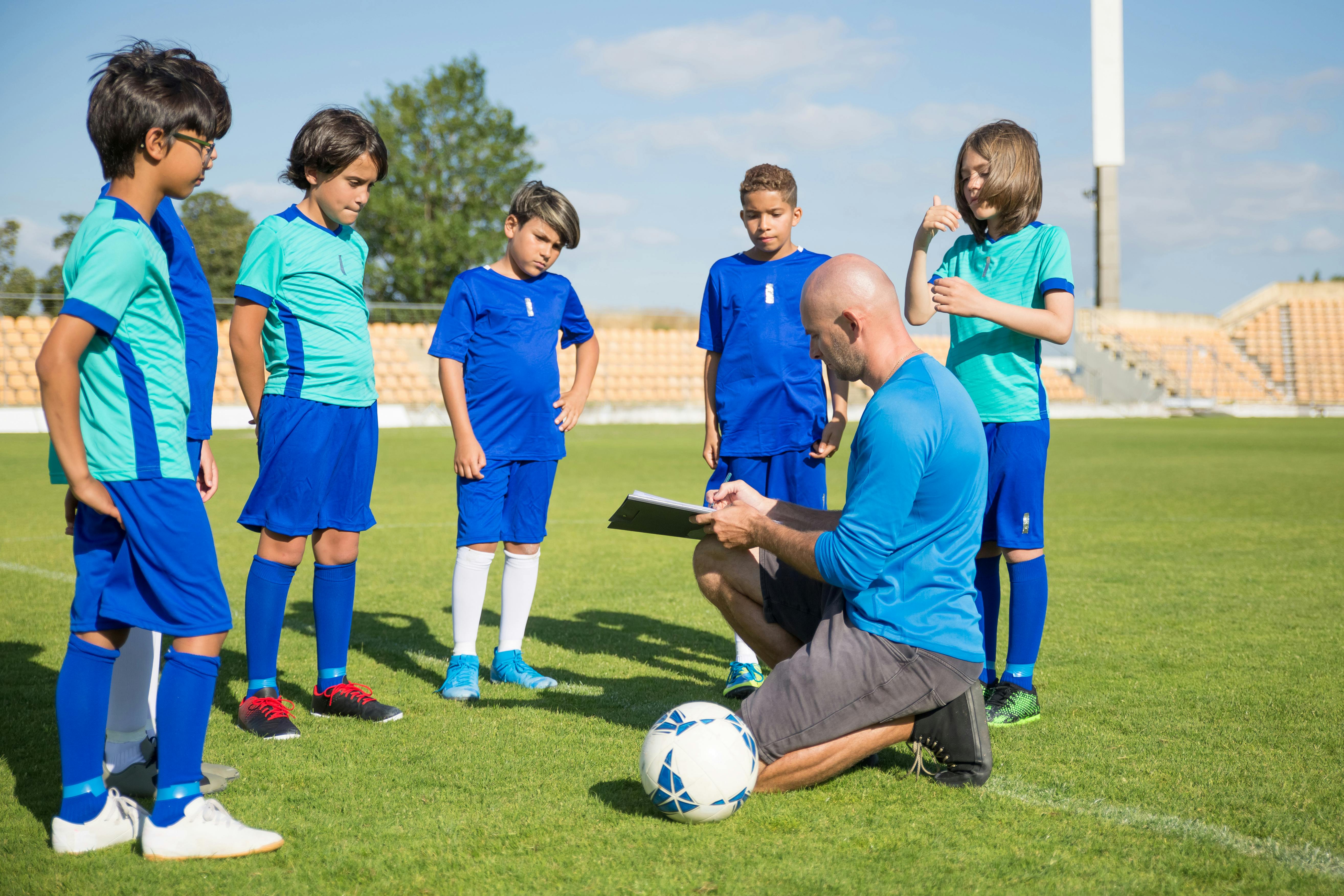
 Player Development Techniques: A Comprehensive Guide to Youth Soccer Coaching Strategies
Youth soccer coaching requires more than just knowledge of the game. It demands a deep understanding of how children learn, grow, and develop both physically and emotionally. I have spent years refining my approach to coaching young athletes, and I have discovered that effective player development techniques are the cornerstone of any successful youth program. In this guide, I will share professional age-specific strategies, small-sided game coaching tips, and team cohesion drills that will elevate your coaching. These methods are designed to build confident, skilled, and passionate players who love the game.
Key Principles of Youth Soccer Coaching
Effective youth soccer coaching begins with a solid foundation of core principles. These principles guide every decision you make on the training ground and during matches. I have found that focusing on these fundamentals ensures consistent progress for all players.
Understanding the Developmental Stages
Children are not miniature adults. Their physical, cognitive, and emotional capacities change dramatically as they grow. Age specific soccer coaching strategies are essential for maximizing development. For example, players aged six to eight benefit most from activities that emphasize basic motor skills and fun. At this stage, I avoid complex tactical instructions and instead focus on games that encourage running, jumping, and simple ball manipulation. For players aged nine to twelve, I introduce more structured drills that build technical proficiency and basic positional awareness. Teenagers, on the other hand, are ready for advanced tactical concepts and detailed feedback. Recognizing these stages allows me to tailor my coaching to meet each group where they are.
Creating a Positive Learning Environment
A positive environment is non-negotiable for youth development. I prioritize safety, respect, and encouragement in every session. When players feel safe to make mistakes, they are more willing to take risks and learn new skills. I establish clear expectations for behavior and communication from the first practice. I also make a point to celebrate effort rather than just results. This approach reduces anxiety and fosters a growth mindset. Research from the US Youth Soccer coaching education program emphasizes that a supportive climate significantly improves player retention and enjoyment.
Emphasizing Long-Term Development Over Short-Term Wins
Winning games is exciting, but it should never come at the expense of player growth. I have seen too many coaches sacrifice development for immediate results. My philosophy centers on long-term athlete development. This means giving every player meaningful playing time and exposure to different positions. It means prioritizing skill acquisition over tactical rigidity. For instance, I might let a young goalkeeper play as a forward for a quarter to develop field awareness. This approach builds versatile, intelligent players who understand the game holistically. The Project Play initiative by the Aspen Institute provides excellent data showing that early specialization often leads to burnout and injury.
Building a Foundation of Soccer Fundamentals for Beginners
Every advanced skill rests on a bedrock of fundamentals. I dedicate significant time to soccer fundamentals for beginners, even with older players who may have gaps in their training. Dribbling, passing, receiving, and shooting are the building blocks. I use repetitive, game-like drills to reinforce these skills. For example, a simple passing drill where players must communicate and move into space teaches both technique and teamwork. I avoid static drills that isolate skills from the context of the game. Instead, I design activities that mimic real match scenarios. This ensures that players can transfer their training to actual competition. By solidifying these basics, I prepare players for more complex challenges as they advance.
Building Confidence in Young Players
Confidence is the fuel that drives improvement. Without it, talented players often underperform. I have developed specific strategies to nurture self-belief in every athlete I coach. These methods are grounded in positive psychology and practical experience.
Setting Achievable Goals
Goal setting is a powerful tool for building confidence. I work with each player to establish individual, achievable objectives. These goals are specific, measurable, and time-bound. For example, a beginner might aim to complete five consecutive passes in a drill. A more advanced player might target improving their weak-foot dribbling. When players achieve these goals, they experience a tangible sense of accomplishment. I track progress publicly on a team board to celebrate these wins. This practice reinforces the connection between effort and success. I also adjust goals as players improve, ensuring they always have a challenge that is within reach but not overwhelming.
Providing Constructive Feedback
Feedback is most effective when it is specific and actionable. I avoid vague praise like “good job” and instead offer detailed observations. For instance, I might say, “I noticed you kept your head up while dribbling, which allowed you to see your teammate open on the left.” This type of feedback tells the player exactly what they did well. When correcting errors, I frame my comments around the behavior, not the person. I say, “Let’s work on keeping your ankle locked when you pass,” rather than “You are not passing well.” This distinction preserves the player’s self-worth while addressing the issue. I also use the “sandwich” method, where I start with a positive, offer a correction, and end with encouragement. This approach maintains a supportive tone.
Celebrating Effort and Progress
Winning is not the only measure of success. I make it a point to celebrate effort, improvement, and resilience. After every match, I highlight three specific instances of hard work, regardless of the score. This could be a player who tracked back to defend, a player who attempted a difficult skill, or a player who encouraged a teammate. I also hold “progress moments” during practice where players share something they improved on that week. This ritual normalizes growth and reinforces that every step forward matters. Over time, this culture of celebration builds a team where players support each other’s development.
Using Positive Reinforcement Techniques
Positive reinforcement is more effective than punishment for long-term motivation. I use a system of rewards that are meaningful to young players. This includes verbal praise, extra playing time, or leadership roles like being captain for a day. I also use a “star chart” where players earn stars for demonstrating specific behaviors, such as good sportsmanship or trying a new skill. The key is to reinforce the behaviors I want to see repeated. I am careful to apply reinforcement consistently and fairly. This creates a predictable environment where players know what is valued. Studies from sports psychology consistently show that positive reinforcement enhances self-esteem and intrinsic motivation.
Motivating Youth Soccer Players
Motivation is the engine of development. Without it, even the best drills fall flat. I have learned that motivation in youth soccer is complex and varies by individual. My approach combines intrinsic and extrinsic motivators to keep players engaged.
Intrinsic vs. Extrinsic Motivation
Intrinsic motivation comes from within. It is the love of the game, the joy of mastering a skill, or the satisfaction of contributing to the team. Extrinsic motivation comes from external rewards like trophies, praise, or recognition. I aim to cultivate intrinsic motivation because it is more sustainable. However, I also use extrinsic rewards strategically to spark initial interest. For example, I might offer a “player of the week” award to recognize exceptional effort. Over time, I shift focus to internal rewards by helping players set personal goals and reflect on their own improvement. The motivation research summarized by Psychology Today indicates that intrinsic motivation leads to deeper engagement and longer participation in sports.
Connecting Practice to Game Scenarios
Players are more motivated when they understand why they are doing a drill. I always explain how a practice activity translates to a game situation. For instance, before a passing drill, I show a video clip of a professional team using similar passes to break a defensive line. This connection makes the drill meaningful. I also design drills that are competitive and fun. Small-sided games are excellent for this because they replicate the chaos and excitement of a real match. When players see the direct link between practice and performance, their motivation to work hard increases dramatically.
Empowering Players with Choices
Autonomy is a powerful motivator. I give players choices whenever possible. This could be as simple as letting them choose which drill to start with or which position to play in a scrimmage. I also involve them in setting team rules and deciding on team goals. When players feel a sense of ownership, they are more invested in the outcome. For example, I let the team vote on the warm-up activity for the first five minutes of practice. This small gesture gives them a voice and makes them feel respected. Empowered players are more likely to take initiative and show up with enthusiasm.
Using Gamification to Maintain Engagement
Gamification adds an element of fun and competition to training. I incorporate points, levels, and challenges into my drills. For example, I create a “skill challenge” where players earn points for successful dribbles, passes, or shots. They can “level up” by achieving a certain number of points. I also use “missions” where players must complete a series of tasks to earn a reward, like choosing the music for warm-up. This approach turns repetitive practice into an engaging game. It also provides immediate feedback, which keeps players focused. Gamification works particularly well with younger players who are naturally drawn to play-based learning.
Game Strategies for Youth Soccer
Game strategy in youth soccer must be simplified and age-appropriate. I focus on teaching core concepts that players can execute without overwhelming them. These strategies build a foundation for more complex tactics as they mature.
Principles of Attack and Defense
I teach the basic principles of attack and defense from an early age. For attack, this includes maintaining width, creating depth, and supporting the player on the ball. I use a simple mantra: “spread out, move forward, and help your teammate.” For defense, I focus on pressing, covering, and balancing. I explain that defense is not just about tackling but about positioning and communication. I use small-sided games to emphasize these principles because the reduced numbers make the concepts clearer. For example, in a 3v3 game, players can see the importance of spreading out to create passing lanes. By repeating these principles in every session, they become second nature.
Positional Awareness and Roles
Young players often struggle with positional awareness. I introduce positions gradually, starting with broad roles like “attacker,” “midfielder,” and “defender.” I use colored bibs and zone markings on the field to help players understand their area of responsibility. I also rotate players through different positions so they develop a complete understanding of the game. This prevents players from becoming pigeonholed too early. For older players, I introduce more specific roles like “holding midfielder” or “winger” and explain their tactical responsibilities. I use video analysis to show examples of professional players in these roles. This visual learning helps players grasp abstract concepts.
Transition Moments
Transitions are the most crucial moments in a soccer match. I teach players to recognize and react quickly when possession changes. I use a simple rule: “When we lose the ball, we attack it. When we win the ball, we attack the goal.” I design drills that simulate transition moments, such as a 4v4 game where the ball is constantly changing possession. I emphasize the importance of immediate pressure after losing the ball and immediate support after winning it. Players learn to switch mindsets instantly. This awareness makes them more dynamic and unpredictable opponents.
Set Pieces and Restarts
Set pieces are an often-overlooked aspect of youth soccer. I dedicate time to practicing corner kicks, free kicks, and throw-ins. I keep the routines simple and repeat them until they become automatic. For example, I teach a basic corner kick where players attack the near post and far post. I assign specific roles to each player, such as the runner, the decoy, and the target. I also practice defensive set pieces to prevent goals. By making set pieces a regular part of training, players gain confidence in these situations. This attention to detail can be the difference between winning and losing close games.
Creating Effective Soccer Practice Plans for Kids
A well-structured practice plan is the foundation of a successful season. I design every session with clear objectives, appropriate pacing, and maximum participation. My goal is to create an environment where every player is engaged and learning.
Structuring a Practice Session
I follow a consistent structure for every practice. This provides predictability and helps players transition smoothly between activities. A typical session includes a warm-up (10-15 minutes), a technical focus (15-20 minutes), a tactical application (20-25 minutes), and a scrimmage (15-20 minutes). I always end with a cool-down and a team huddle. The warm-up is dynamic and includes movements that prepare the body for the session. The technical focus isolates a specific skill, such as dribbling or passing. The tactical application uses small-sided games to apply the skill in a game-like context. The scrimmage allows players to play freely and implement what they have learned. This structure ensures a balanced session that develops multiple aspects of the game.
Incorporating Small-Sided Games
Small-sided games are the heart of my practice plans. They maximize touches on the ball, increase decision-making opportunities, and keep players engaged. I use formats like 3v3, 4v4, and 5v5 depending on the age and skill level. For younger players, I use smaller fields and fewer players to ensure everyone is involved. For older players, I increase the numbers and field size to match their growing tactical awareness. Small sided game coaching tips include using multiple balls, changing the rules to emphasize a specific skill, and allowing players to self-officiate. These games are not just fun; they are highly effective for developing game intelligence.
Balancing Skill Development and Fun
Practice should be challenging but also enjoyable. I strike a balance by alternating between high-focus drills and playful activities. For example, after a technical drill on passing, I might play a game of “keep away” where players must complete a certain number of passes to score a point. This keeps the energy high while reinforcing the skill. I also incorporate player choice into the session, such as letting them decide which game to play at the end of practice. When players are having fun, they are more receptive to coaching. I avoid drills that require long periods of standing in line. Every player should be active for the majority of the session.
Progressive Drills for Continuous Improvement
Drills should become more challenging as players improve. I use a progression model where I start with a simple version and add complexity. For example, a dribbling drill might start with cones in a straight line. Then I add defenders who are passive, then active. Finally, I add a passing component after the dribble. This progression ensures that players are constantly challenged without becoming frustrated. I also differentiate drills for players of different abilities. I provide easier variations for beginners and more complex variations for advanced players. This ensures that every player is working at their optimal level.
Using Technology and Video Analysis
Technology can enhance practice plans. I use video analysis to show players their technique and decision-making. I record drills and matches and review clips with individual players or the whole team. This visual feedback is powerful because players can see exactly what they did right or wrong. I also use apps to track player progress and share practice plans with parents. The National Soccer Coaches Association of America coaching resources offer excellent guides on integrating technology into coaching. However, I am careful not to overuse technology. The primary focus remains on active participation and personal interaction.
Youth Soccer Communication Skills
Communication is the glue that holds a team together. I teach players how to communicate effectively on and off the field. These skills are as important as technical ability.
Verbal Communication on the Field
I teach players specific verbal cues for game situations. These include “man on,” “turn,” “time,” “away,” and “keeper.” I practice these calls during drills so they become automatic. I also emphasize the tone of communication. Calls should be loud, clear, and positive. I discourage negative comments or blame. I model this behavior by using the same language myself. For example, I call out “man on” during practice to alert a player to pressure. This consistency helps players learn the language of the game. Effective verbal communication reduces errors and builds trust among teammates.
Non-Verbal Communication and Body Language
Body language speaks volumes. I teach players to use confident posture, eye contact, and gestures to communicate. A player who points to where they want the ball is communicating without words. I also teach players to read the body language of opponents and teammates. For example, an opponent who is leaning back may be about to pass backward. I use drills that require non-verbal communication, such as a passing drill where players cannot speak and must use hand signals. This builds awareness and creativity. Positive body language, such as high-fives and pats on the back, also reinforces team cohesion.
Active Listening and Feedback
Communication is a two-way street. I teach players to listen actively when I am giving instructions or when teammates are speaking. This means making eye contact, nodding, and asking clarifying questions. I also encourage players to give feedback to each other in a constructive way. For example, after a drill, I might ask a player to tell their partner one thing they did well. This practice builds a culture of mutual respect and continuous improvement. I model active listening by stopping what I am doing when a player speaks to me. This shows them that their voice matters.
Building Trust Through Open Communication
Trust is built through honest and open communication. I hold regular team meetings where players can share their thoughts and concerns. I create a safe space where no topic is off limits. I also have one-on-one check-ins with each player to discuss their progress and goals. These conversations are confidential and non-judgmental. When players trust their coach, they are more likely to be receptive to feedback and coaching. Trust also improves team dynamics because players feel comfortable relying on each other. Building this trust takes time, but it is one of the most valuable investments a coach can make.
Building Team Cohesion Drills
A cohesive team is greater than the sum of its parts. I use specific drills and activities to build unity, trust, and a shared sense of purpose. Building team cohesion drills are essential for creating a positive team culture.
Icebreakers and Team Building Activities
I start every season with icebreaker activities. These simple games help players learn each other’s names, interests, and personalities. For example, I use a “two truths and a lie” game where players share facts about themselves. I also organize team outings, like a pizza night or a bowling trip, outside of practice. These social interactions build bonds that translate to the field. When players know each other as people, they are more likely to support each other during tough moments. I continue these activities throughout the season, not just at the start. Regular team building keeps the connections strong.
Cooperative Drills That Require Teamwork
I design drills that cannot be completed without cooperation. For example, I use a drill where players must pass the ball through a series of gates while moving as a unit. If one player is out of sync, the drill fails. This teaches players to work together and communicate. Another drill involves a possession game where the team must complete a certain number of passes before they can score. This emphasizes patience and teamwork over individual heroics. Cooperative drills build a sense of collective responsibility. Players learn that their success depends on their teammates, which fosters a supportive environment.
Establishing Team Norms and Values
Every team needs a set of shared values. I facilitate a session where players brainstorm the values they want to define the team. Common values include respect, effort, accountability, and fun. We write these values down and display them in the locker room. I also establish norms for behavior, such as how we warm up, how we address each other, and how we handle conflict. These norms create a consistent culture that players can rely on. When everyone is aligned on values and norms, the team operates more smoothly. I revisit these values regularly to ensure they remain relevant.
Conflict Resolution Strategies
Conflict is inevitable on any team. I teach players how to resolve disagreements constructively. I use a simple process: identify the issue, listen to each perspective, find common ground, and agree on a solution. I role-play conflict scenarios during practice so players can practice these skills in a safe environment. For example, I might stage a disagreement over a missed pass and guide the players through the resolution process. I also model calm and respectful conflict resolution myself. When conflicts arise during games, I address them immediately but privately. This prevents issues from festering and damaging team morale.
Developing Soccer Fundamentals for Beginners
Teaching beginners requires patience, creativity, and a focus on fun. I break down each fundamental skill into simple steps and use engaging activities to reinforce learning. Soccer fundamentals for beginners are the building blocks for future success.
Dribbling Fundamentals
Dribbling is the first skill I teach. I start with close control, where players keep the ball within a few inches of their feet. I use cones to create a simple slalom course. I emphasize using both feet from the very beginning. I teach players to keep their head up while dribbling by calling out numbers or colors for them to identify. I use games like “red light, green light” where players must stop and start on command. This develops control and awareness. As players improve, I introduce changes of speed and direction. Dribbling should be taught as a tool for creating space, not just for showing off.
Passing and Receiving
Passing is the foundation of team play. I teach the inside of the foot pass first because it is the most accurate. I emphasize a locked ankle, a steady non-kicking foot, and a follow-through toward the target. I use partner drills where players pass back and forth over increasing distances. I also teach receiving by focusing on the first touch. Players learn to cushion the ball with the inside of their foot and direct it into space. I use drills where players receive a pass and then pass to a different target. This simulates game situations where they must quickly decide where to play the ball. Passing and receiving are practiced in every session because they are used constantly in matches.
Shooting Technique
Shooting is the most exciting skill for young players. I teach the basic shooting technique using the laces for power and the inside of the foot for accuracy. I emphasize keeping the head down, the non-kicking foot pointing at the target, and following through. I use drills where players shoot from different angles and distances. I also teach them to shoot with both feet. I incorporate goalkeepers into shooting drills so players learn to aim away from the goalkeeper. I avoid having players shoot from very long distances because it encourages poor technique. Instead, I focus on close-range finishing where accuracy is paramount.
Basic Defensive Skills
Defense is often neglected in beginner coaching. I teach basic defensive stance, with knees bent and weight on the balls of the feet. I teach players to stay goal-side of their opponent and to jockey rather than dive in. I use 1v1 drills where a defender must prevent an attacker from scoring. I emphasize patience and positioning over aggression. I also teach the concept of “covering” where a defender provides support to a teammate who is being dribbled at. These fundamentals give beginners a foundation for more advanced defensive tactics later. Learning to defend also helps players appreciate the importance of the defensive phase of the game.
Adapting Coaching for Different Age Groups
Age specific soccer coaching strategies are critical for maximizing development. I tailor my approach based on the physical, cognitive, and emotional characteristics of each age group.
Coaching Ages 6 to 8: Fun and Fundamentals
For this age group, fun is the primary objective. Sessions are high-energy and game-based. I use small-sided games like 3v3 with no goalkeepers to maximize touches. I avoid long explanations and instead use demonstration and guided discovery. I focus on basic motor skills like running, jumping, and changing direction. I introduce soccer fundamentals for beginners through playful activities. For example, I use a game called “sharks and minnows” to teach dribbling and evasion. I keep groups small and provide individual attention. The goal is to create a positive first experience with soccer that fosters a love for the game.
Coaching Ages 9 to 12: Skill Development and Introduction to Tactics
At this stage, players are ready for more structured skill development. I introduce more complex drills that require repetition and focus. I begin teaching basic tactics like maintaining shape and supporting the ball. I use 4v4 and 5v5 formats to introduce positions and roles. I also start incorporating simple set pieces. Communication becomes more important, and I teach specific verbal cues. I emphasize the importance of teamwork and sportsmanship. I provide more detailed feedback and encourage players to reflect on their performance. This age is a critical window for skill acquisition, so I ensure that technical training is a priority.
Coaching Ages 13 to 18: Advanced Tactics and Individual Responsibility
Teenagers are ready for advanced tactical concepts and detailed analysis. I use 11v11 scrimmages to teach formations, pressing, and transition play. I introduce video analysis to break down games and identify areas for improvement. I give players more responsibility for their own development, such as creating individual training plans. I also focus on mental preparation, including visualization and goal setting. Communication is more direct and analytical. I treat players as young adults and expect them to take ownership of their performance. This approach prepares them for the demands of competitive soccer and life beyond the game.
Coaching Mixed-Age Groups
Sometimes I coach teams with a wide range of ages and abilities. In these situations, I use differentiated instruction. I create stations with different levels of difficulty. For example, one station might focus on basic dribbling while another focuses on advanced passing combinations. I also use peer coaching, where older players help younger ones. This builds leadership skills in the older players and provides role models for the younger ones. I adjust the game format to ensure that everyone is challenged appropriately. Mixed-age groups require flexibility and creativity, but they can be very rewarding.
Conclusion
Effective youth soccer coaching is a multifaceted endeavor that requires knowledge, patience, and a genuine passion for helping young people grow. By focusing on player development techniques, building confidence, and creating a positive team culture, you can make a lasting impact on your players. Remember to adapt your coaching to the age and ability of your players, prioritize long-term development over short-term wins, and always keep the fun in the game. The strategies and drills I have shared in this guide are proven to develop skilled, confident, and cohesive teams. I encourage you to implement these methods in your own coaching practice and watch your players thrive. The journey of coaching youth soccer is incredibly rewarding, and I wish you the best of luck on your path.