
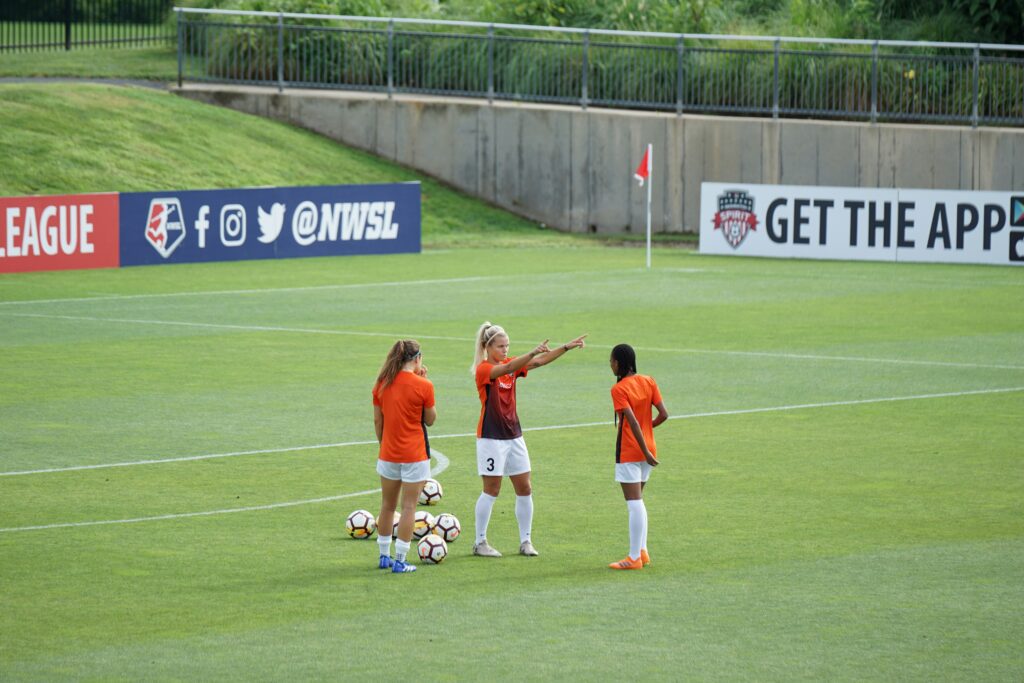
Teaching Defensive Shape to Young Soccer Players
Most youth teams struggle defensively because players chase the ball instead of holding shape. Teaching defensive structure helps players understand how to protect space, support teammates, and make defending a team effort—not an individual scramble. With simple concepts and age‑appropriate drills, young players can learn to defend intelligently and confidently.
Why Young Players Struggle With Defense
Kids naturally want to chase the ball. This leads to:
- All defenders collapsing on the ball
- Large gaps behind the first defender
- No cover or balance
- Easy scoring chances for opponents
- Confusion about roles and responsibilities
Defensive shape teaches players how to defend as a unit instead of reacting individually.
The Three Core Concepts of Defensive Shape
Every defensive situation—whether 1v1 or 11v11—comes down to three principles:
1. Pressure
The closest defender applies controlled pressure on the ball. Their job is not always to win the ball—it’s to slow the attacker down.
2. Cover
The second defender provides support behind or beside the first defender. They protect space and prevent the attacker from beating the first defender easily.
3. Balance
The third defender protects the weak side, preventing passes or runs into open space.
Teaching these three roles helps players understand how to defend as a team.
Simple Drills to Teach Defensive Shape
1. 1v1 Pressure Drill
- Focus on slowing the attacker
- Teach proper body shape (side-on, low stance)
- Encourage patience instead of diving in
2. 2v2 Pressure + Cover
- One defender pressures the ball
- The second defender provides cover
- Switch roles as the ball moves
3. 3v3 Defensive Triangle
- Players learn pressure, cover, and balance
- Coach freezes play to show positioning
- Great for teaching spacing and angles
4. 4v4 Directional Defending
- Teams defend mini goals or end zones
- Players learn to shift as a unit
- Encourages communication and awareness
Teaching Back Line Shape in 7v7 and 9v9
As players move into larger formats, defensive shape becomes even more important.
7v7 (Two Defenders + One Midfielder)
- Defenders stay connected, not too far apart
- Midfielder drops in to provide balance
- Back line shifts together as the ball moves
9v9 (Three Defenders + Midfield Support)
- Introduce the concept of a “back three”
- Outside defenders protect wide channels
- Central defender organizes shape
- Midfielders track runners and support pressure
Keep instructions simple—young players learn best through repetition and clear cues.
Common Defensive Mistakes and How to Fix Them
- Ball watching: Teach players to scan for runners.
- Diving in: Emphasize patience and controlled pressure.
- Too much space between defenders: Use “arm’s length” spacing as a guide.
- No cover: Freeze play and show the correct angle.
- Chasing instead of shifting: Teach defenders to move together.
Coaching Cues That Make a Big Difference
- “Slow them down.”
- “Stay connected.”
- “Cover behind.”
- “Shift together.”
- “Protect the middle.”
Short, simple cues help players remember concepts during games.
Sample Defensive Shape Practice Plan
Minutes 1–10: Warm-Up + 1v1 Pressure
- Focus on body shape and patience
Minutes 11–25: 2v2 Pressure + Cover
- Rotate roles as the ball moves
Minutes 26–40: 3v3 Defensive Triangle
- Teach pressure, cover, balance
Minutes 41–55: 4v4 Directional Defending
- Shift as a unit
- Protect mini goals
Minutes 56–60: Review + Coaching Cues
- Reinforce key concepts
- Celebrate improvements
Final Thoughts
Defensive shape is one of the most important tactical concepts in youth soccer. When players learn pressure, cover, and balance, they defend smarter, stay organized, and work together as a team. With simple drills and clear coaching cues, even young players can develop strong defensive habits that carry into every game.